„Following”, „Memento”, „Bezsenność”. Nolan – początek

Maria Dutkiewicz
It’s hard to believe, but Nolan wasn’t always that Nolan. Before he started shooting the Trojan War and atomic explosions, he had far less at his disposal: black-and-white film, a camera in his hand, and a budget that amounted to roughly a handful of spare change.
If someone were taking bets in the film world, there’d be a few sure-thing tropes: in a Quentin Tarantino film, there will be a shot of feet. In a Wes Anderson film, a perfectly symmetrical frame will show up. Michael Bay will blow something up. And Christopher Nolan? Nolan will tangle with time, memory, and chronology. And along the way, he’ll pull off some peak of cinematic craft with precision.
In a word-association game, the name “Nolan” would prompt the answer “passion” – and one bordering on “obsession.” It seems that it’s this very obsession that lets him pull off things that seem impossible – take, for instance, spending a whole year shooting his debut only on weekends, or becoming the first person in the world to make a film shot one hundred percent on IMAX 70mm cameras and film stock (we’re talking, of course, about “The Odyssey”). This obsession is what makes Nolan take himself very seriously as a filmmaker. And it’s probably thanks to it that, if he’s looking for money for a project today, he’ll find it. He’s managed to build a name that functions like a franchise brand in its own right. There are very few filmmakers with that kind of standing – maybe Spielberg once held that position, maybe Lucas? Today there are probably fewer of them than fingers on two hands. So why is it Nolan? Partly, it’s probably because he creates not just films, but film events that draw crowds into theaters. That status of exceptionality often comes from impressive technical feats – IMAX cameras, 70mm film stock, budgets in the hundreds of millions – but his distinctive, widely beloved, labyrinthine plots matter too. Nolan is a so-called “writer-director,” meaning he’s a director who writes his own screenplays. His scripts resemble Rubik’s cubes and logic puzzles: you can pick them apart, dig into them, spin out guesses and theories almost endlessly. The interpretations of “Inception” probably number in the hundreds by now. How do you craft stories fertile enough to infect and take root in other people’s minds, so that they’ll want to turn the puzzle over and over until they find the answer? To write stories like that, you need to be burning with an obsession for cracking your own ideas.
Nolan, as befits a half-Englishman, loves tea, lives fairly privately, and likes to create things analog. He has neither a smartphone nor an email address – oh, how I envy him that possibility; it seems you have to become one of the most prominent directors of our time to get away with that today. He’s been making epic, practically blockbuster-scale cinema for a long time now, but he steers clear of overusing CGI – he does use it, but he’s a major champion of practical effects: models, makeup, stuntwork, and so on. Even in the impossibly horrific scene from “The Odyssey” where people transform into pigs, most of it is the magic of editing, says Nolan, a devotee of what film stock can do. And yet, before he started shooting the Trojan War, atomic explosions, bending time, and building film worlds the size of small universes, he had far less at his disposal: black-and-white film, a camera in his hand, friends in front of the lens, and a budget drawn from his own pocket and his lead actor’s, amounting to roughly a handful of spare change. Already in his feature debut, you can find many elements that would later become his trademarks. It’s hard to believe, but Nolan wasn’t always that Nolan.
“Following” – creativity grows in the face of constraints
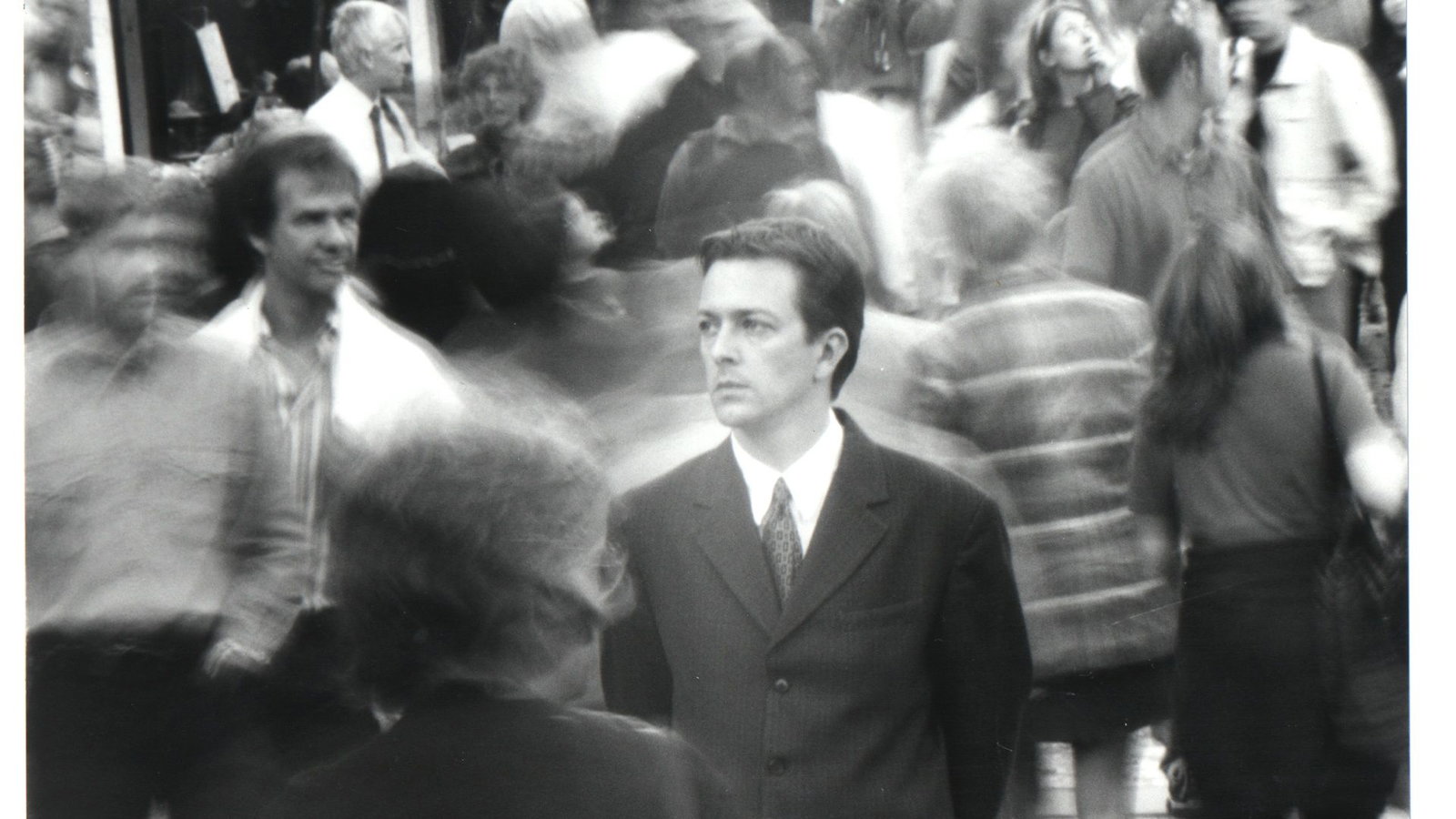
Judging by his filmography, I’d conclude Nolan loves a challenge – and what else is making a debut for $6,000 if not that? In a sense, it’s a way of searching for answers to the very puzzles he’s so fond of: how do you turn budget constraints into directorial choices that end up shaping the story’s visual language? And what story do you pick to do it with? The crime thriller “Following” from 1998 is a masterclass in ingenuity and discipline. The screenplay was, of course, written by the director himself, and he operated the camera personally too. Formal choices, though dictated by limitations, he turned into a working method. The image is black and white because that film stock is cheaper, and using it means you don’t have to color-correct the shots afterward. The scenes play out in houses – mostly ones belonging to Nolan’s friends and parents. Characters often stand by windows so as not to rely on lamps, which there wasn’t money for. The plot is built around a handful of people, mostly friends, because every additional person meant another salary to pay. Even Nolan’s trademark non-linear storytelling has a pragmatic justification here – this trick made it easier to splice together footage shot on different days during editing, though apparently he settled on that solution after the shoot was already done. This is also where his well-known, rigorous approach to rehearsals got its start. Scenes were drilled for hours so they could be captured as quickly as possible once the camera rolled. The reason was simple: every take meant more film stock, and film stock was expensive. So the shoot dragged on for almost a year, because it only happened on weekends – Monday through Friday, the crew all had day jobs. In the end, the film started picking up recognition at festivals, and investors saw that this kid could make something interesting for next to nothing, so they had no qualms handing him money for his next project. Where “Following” had a budget of a few thousand dollars, his very next film was made for nine million.
You’d think one could finally breathe easy…
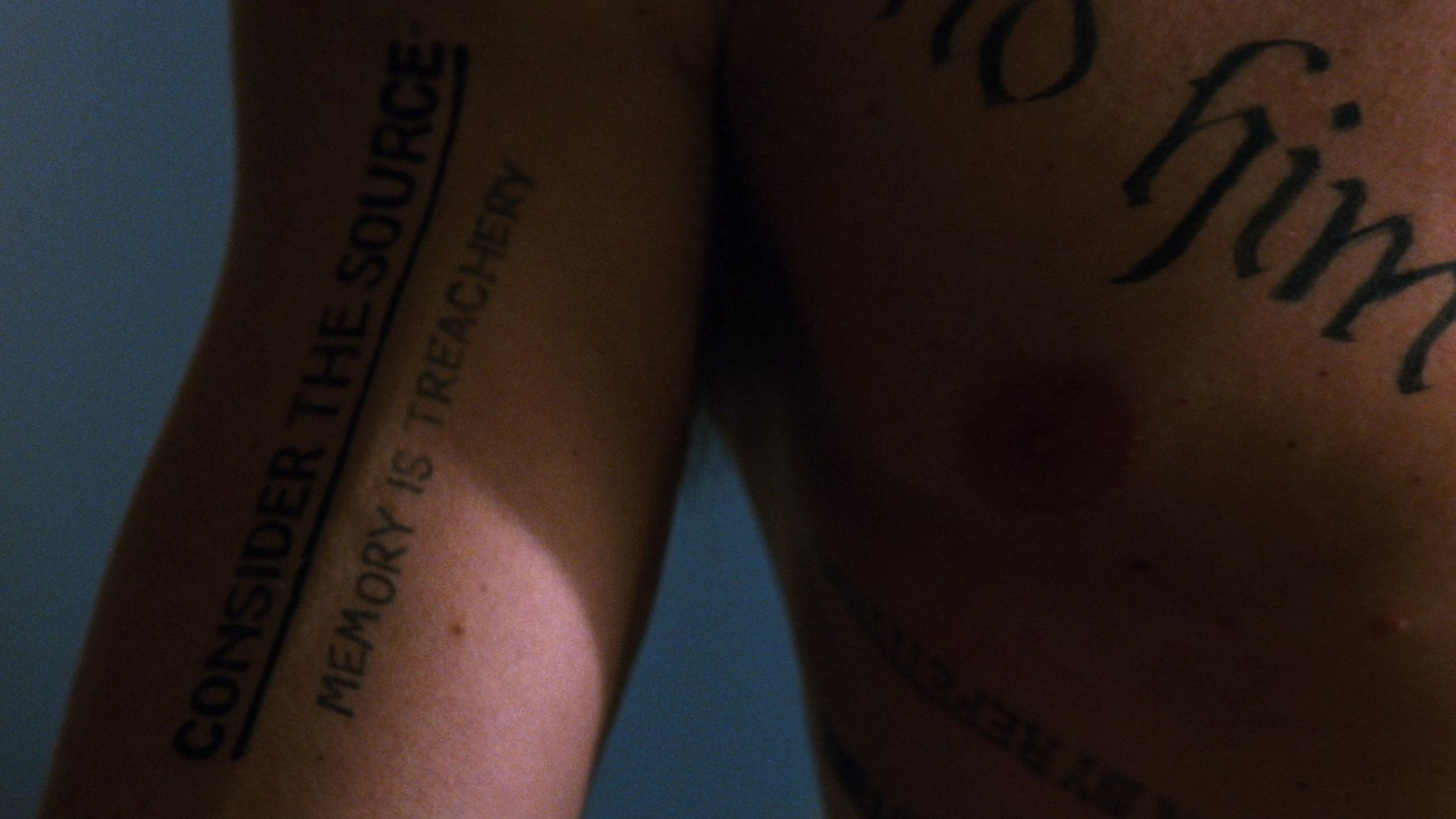
“Memento” – form is content
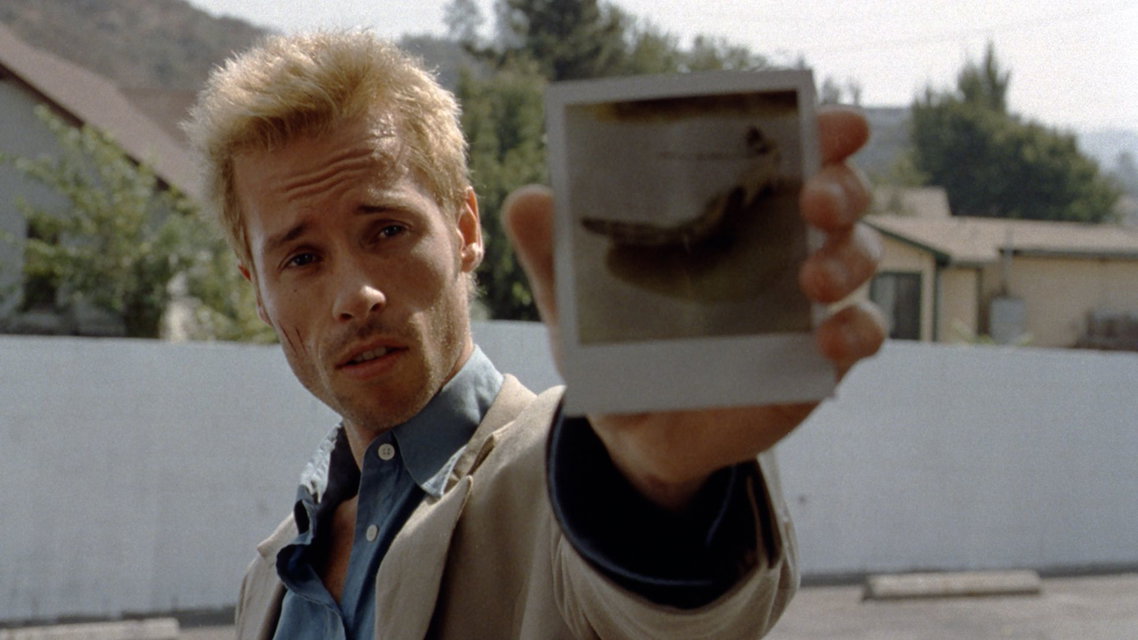
...but does Nolan want peace and quiet? If “Following” was his ticket in, it was “Memento” that sealed his status as one of the most sought-after directors in the world. Financial success, Oscar nominations, but also the forging of an auteur brand that today lets him have so-called final cut – full artistic control. Our narrator-with-no-memory is a man whose condition won’t let him build any certain picture of reality, and we, the audience, can’t trust him one bit either. Guy Pearce is joined by Joe Pantoliano and Carrie-Anne Moss, both already fresh off “The Matrix,” one playing a slippery villain, the other a victim of circumstance – but which is which? In “Memento,” the plot unfolds across two timelines that converge in the climactic sequence. It’s the legendary cinematic puzzle that paved the way for later narratively complex titles like “The Prestige” or “Inception.” Watch it, and you’ll never forget who Sammy Jankis was.
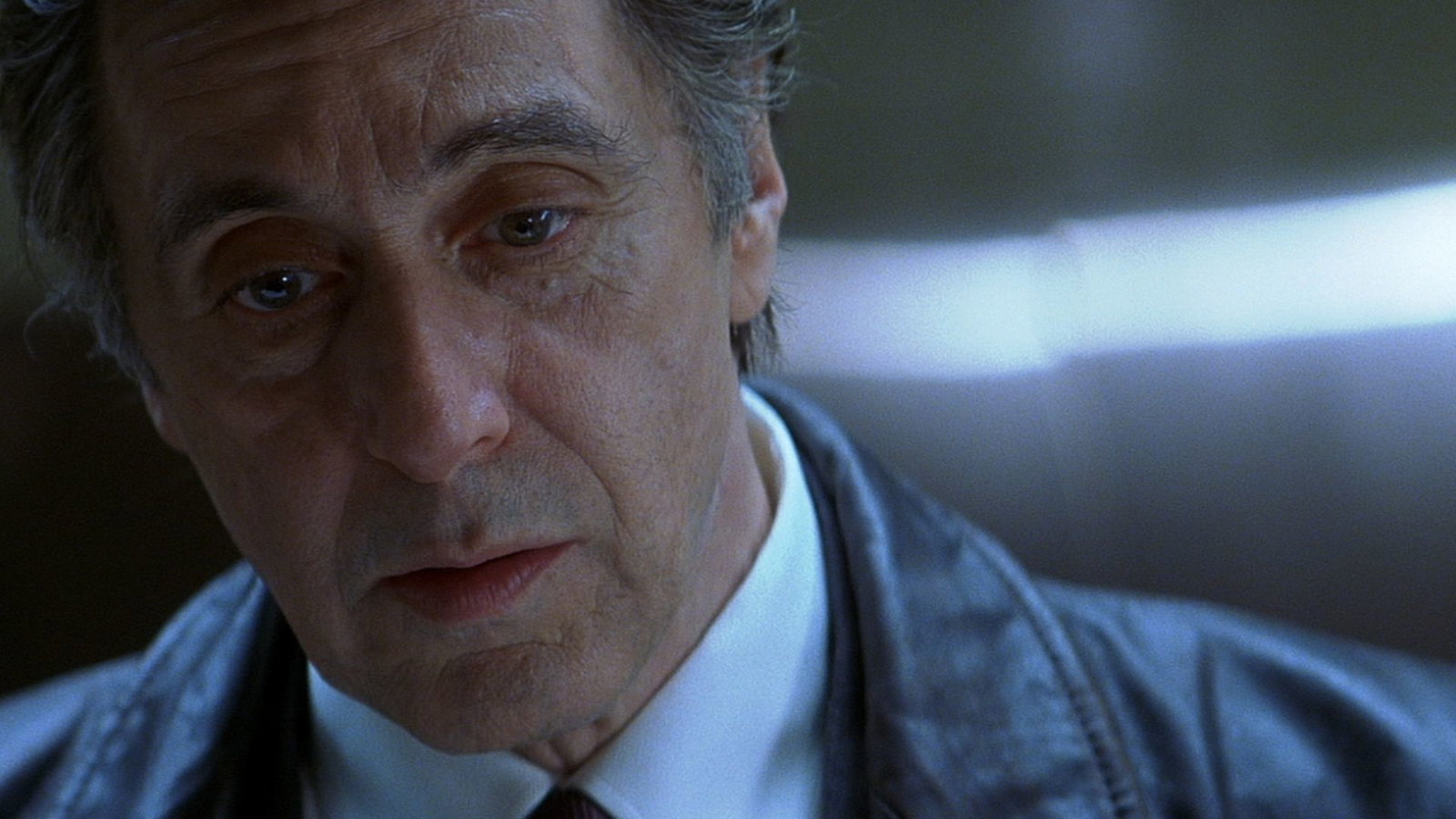
“Insomnia” – a step toward the big (budgets, stars, studios)
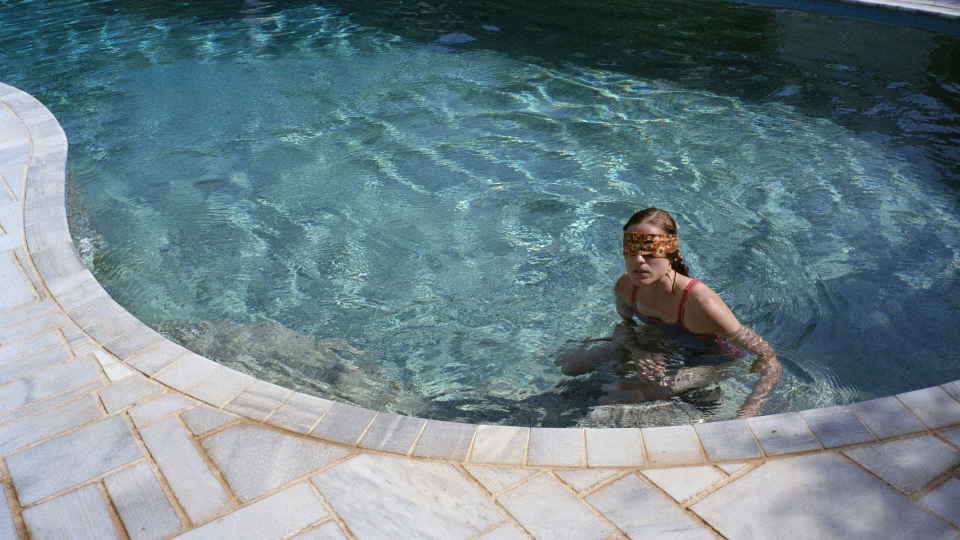
Right after “Memento,” Warner Bros. decided to hand Nolan the reins of “Insomnia”, with a gigantic budget – 46 million dollars – and stars like Al Pacino and Robin Williams. His first big American project was a remake of the Norwegian thriller of the same title, starring Stellan Skarsgård. But even here, Nolan doesn’t abandon what interested him from the very start: a protagonist trapped within his own perspective, a reality that can’t be fully trusted, and the blurred line between what’s known and what only seems to be. The scale changes, but the obsessions don’t. In a sense, it was a crucial test for his filmography – a chance to check whether his way of telling stories would hold up within the Hollywood system. And it did. He proved then that he could handle the pressure of a major studio, which opened the door to his next, breakthrough step: the Batman franchise. And from there, he could keep going – toward ever bigger budgets and bolder experiments with form.
***
Perhaps the most interesting thing about Nolan is that the scale of his films changes radically, but his way of thinking stays consistent. From the very start, he’s been drawn to stories that resist being neatly contained within a single order, and to the question of how to make form itself part of the story. In “Following,” budget constraints forced ingenuity. In “Memento,” the construction of the narrative let the audience experience the protagonist’s own disorientation. Over time, these pursuits grew in scope and ambition, but their source seems to have remained the same: the need to test just how far precision can be pushed. Nolan doesn’t seem to see the point in anything short of a reckoning with perfection.
“With every project, I have to believe I’m making the best film ever made,” he once said.
And well – it shows, it has always shown, and I’d bet it will keep showing.
This translation was done with AI.
Available on Cinobo
Watch Nolan’s early films on Cinobo